17.11.10

How to signal like an Israeli driver...

Don't try these techniques when you are a Hyundai Getz going up against a semi-trailer.

"What??" you're saying, as you read the post title. Israelis don't signal while driving! After all, as I shared in my guide to driving like an Israeli, "Everyone Else on the Road is an Idiot," there's no point in sharing information like, say, the intention to shift lanes with drivers who are too stupid to understand.

But Israelis do have their own form of non-verbal communication while driving. To pass as an Israeli, master these techniques.

1. The Ex-Post-Facto Turn Signal. 

Signaling before turning or making a lane shift would be giving away information (and might result in the person you're trying to cut off speeding up so you can't cut them off). But Israelis do know that signaling while changing lanes is mandatory. The simple solution? Signal after you change lanes. Barur. 

2. The Nu-Pay-Attention Honk.

I come from a small, friendly American city in which someone at an intersection will only honk at you if you forget to turn left in front of them (cutting them off) after the light turns green. If people in my home town do honk in traffic, they're seriously upset-- blaring the horn is one step away from jumping out of your SUV and bashing in an offending driver's window with a baseball bat.

In Israel, on the other hand, honking (like shouting) is just another form of social interaction. Situations in which honking is expected include:
  • Another driver seems to be pondering the idea of pulling out of a driveway or parking lot anywhere in the vicinity of your moving vehicle. Because they are idiots, you assume that they will pull into your car unless you honk.
  • Another driver does not appear to have his feet poised above the gas pedal the moment the light flashes yellow (which happens before the light turns green here, in a little NASCAR "start yer engines" moment). If said driver hesitates for more than a millisecond or, G-d forbid, actually waits for the light to turn green, HONK. 
  • You see someone you know.
  • You see people standing on a street corner holding signs.
  • You feel happy and you know it.
3. The Hey-Get-Out-of-My-Way Headlight Flash.

If the driver in front of you is going too slowly (i.e., only 10 kilometers over the speed limit), you should flash your lights urgently into their rear view mirror until they pull over or shift lanes. (You, obviously, are in too much of a hurry to be bothered to lane shift.) My husband and I were recently driving along a country road in northern Israel and a car started flashing his brights at us from about 100 meters back. This is the most annoying behavior of the Israeli driver, and you have my permission to block this car in and drive as slowly as possible instead of pulling over.

By the way, something good to know: Israeli traffic police drive with their blue-and-white lights flashing. This does NOT mean that you need to pull over. They'll put on their siren if you do. On the other hand, if American traffic police drive behind you with their lights flashing, you DO need to pull over. My husband learned this the hard way when he came to the US in his teens. Luckily the cop liked Israel.

4. The How-You-Doin' Intersection Stare.

Ok, this is one of those things I'll never really feel comfortable doing, but apparently when Israelis stop at a traffic light, it's considered polite behavior to turn and stare at the people in the car next to you. I learned this when I watched an Israeli morning show segment about body language b'chul (abroad), and the Israeli host was shocked to learn that in certain parts of the world complete strangers will get mad if you scrutinize them while waiting for the light to turn yellow, er, green.


5. The Tut-Tut-Tut Finger Shake.

The driving version of the Instructional Finger (which I discussed in my guide to Israeli body language), this is the gesture you make when someone does something foolish or misguided (like attempting to cut you off) while driving. Like a wise grandmother from a children's story, put a pained expression on your face and shake your finger sadly at the offending driver. Alternately, raise your hand in the air with your palm towards your face. Both of these are more effective than actually, say, giving another driver the finger, because these gestures indicate an extra level of parental disappointment at another driver's failings. And we all know how effective Jewish Guilt can be.


6. The No-Really-I'm-Cutting-You-Off Nose Nudge.

This maneuver (familiar to anyone who has attempted to drive in New York City) indicates your seriousness about actually cutting off the driver in the next lane. If you nudge the front end of your car into the other driver's lane, some of the time he'll brake to let you in. Most the time he'll swerve around you. Once I saw this result in the Slowest Accident Ever: we were driving in rush-hour traffic through Kiryat Ata when a Hareidi guy tried to nose-nudge his way in front of a young female soldier, who wasn't having any of it. She nose-nudged him back, blaring on her horn. Over the next ten minutes, they each jerked forward inch by inch, screaming at each other (and not the friendly kind of Israeli yelling), until finally-- at about the speed of a dandelion growing in a nature documentary-- they collided into each other and dented their cars. Am I a bad person if that made my day?

Then, of course, there's the art of communicating on a cell phone while driving like an Israeli, but I'll save that for another day. (Here's a sneak preview: it involves lots of hand gesturing.)

Anything you would add to this list?

10.11.10

This blog has been shiputzed!

Well, not really. But I just wanted an excuse to use the Hebrew word "shiputzim" (rennovations) as an English verb. Isn't that a great word? Shiputz. Sheepootz. Shipootz.

Today I did two things I've been meaning to do for a little while.

1. I brought back my blog roll! Thanks to your suggestions, I discovered some blogs I hadn't known about and added some of my favorites as well. Let me know if you think there are any more I should add and if importing the title of recent posts makes this page load too slowly.

2. I set up Facebook Networked Blogs! I mainly did this so that I could stop importing my posts to my personal Facebook account as notes, which A) makes my old college friends think I'm oddly obsessed with Israeli celebrities and B) means that sometimes the most interesting comments on my posts appear on my personal Facebook page rather than on this blog. Plus I want people to read my blog here rather than as a note because it looks prettier here and comments on this page make it look like more people read my blog. :) (Never mind that failing to post for three months tends to make comments go away... have I mentioned how incredibly lucky I feel that some of you still read this blog??) Anyway, my vanity will be infinitely flattered if it looks like I have more than three Facebook Networked Blogs followers, so feel free to add yourself to the list. :)

To see both of these changes, scroll down-- they're toward the bottom of the sidebar on the right. 

Now if I only could get our neighbors to stop shiputzing their apartments, we could all be happy. I'm working from home to the sound of jackhammers and people shouting at each other in Arabic. At least it's better than when our downstairs neighbors sing...

9.11.10

On going home again...

This is the home of some other rich Jews (ya know, the one 
designed by Frank Lloyd Wright), not my home, but I visited 
it when I was back in the US. Because I get to be a tourist now!
And that's my beautiful niece, Sarah.

This past August I went back to the US for the first time since I made aliyah in the spring of 2008. I honestly didn't know what to expect. Would buildings and cars in America suddenly seem gargantuan? Would the green scare me? Or (and this was honestly the most frightening possibility) would I go back to the US and feel so comfortable that I wouldn't want to return to Israel?

The culture shock started for me on the flight to the US. I was sitting next to an Israeli couple, and before the fasten-seatbelts signs on our Continental flight turned off, I found myself as the one better at communicating. I was the one explaining what "ginger ale" means and translating their requests for "no ice" to the stressed-out American flight attendants. Yet I felt relieved, for some reason, that I was sitting next to Israelis. I eyed the American couple in front of me-- an overweight family in sweats and t-shirts, squabbling with each other about things that seemed so trivial. The Israeli couple next to me talked with me about their feelings about religion, about aliyah, about cultural differences between Israel and America, about already missing the people we had left behind in Israel. To my surprise, I didn't want to stop speaking in Hebrew just yet. Interacting with the flight attendants in English seemed so... easy. Mechanical. They were polite but not kind; they smiled but seemed annoyed. Huh. Maybe this whole "Americans are nice" thing won't be so compelling after all.

As I waited for my transfer flight in Newark, I got a taste of what it means to be "Israeli" in the US. The former homeschooling mom (who reminded me of my own) with the blue T-Shirt LOVED Israel, in fact they celebrated the Holiday of Booths with their church! She looked at me expectantly: I was from the Holy Land. I felt like she wanted something from me, but I wasn't sure what. The reality of living in Israel feels so different from the idealized version that American Christians and even American Jews believe in. I felt like my own country, my own Israel was already being traded for the Promised Land, for some shiny myth rather than the complicated, vibrant, hilarious reality I had left behind.

On my transfer flight to my destination, I found myself (by complete coincidence) sitting next to an Israeli girl. She felt that she didn't belong in Israel and was about to end three years in the city where I grew up to travel to the Netherlands. Yet there was a kind of... commonality in our conversation, an ease of expectations, an honesty. For the next three weeks, this would be the last time I would speak Hebrew to a stranger.

During my time back in the US, I discovered a few things.

1. It was wonderful to see my family and friends. At the same time, being away from them for two years didn't matter as much as I worried it would. I was most worried about what it would be like to see my nieces and nephew-- two years in the life of a one, five, seven, and nine-year-old is a very long time. But after a bit of initial shyness, they were inviting me to go pick flowers, have tea parties, watch movies, run around, and play dress-up as much as ever before. And my one-year-old niece was just getting to know everyone, so I seemed no stranger to her than her grandfather or the dog. (Ok, so she did like the dog better.)

 The pinkies in the air make it fancy. The expression on my face makes it creepy.

2. American service people ARE nice, though their niceness feels impersonal. One of my favorite I'm-not-in-Israel-anymore moments went something like this...

BARNES AND NOBLE CHECKOUT GIRL: You're paying by credit card? Ok, let me just see some photo ID.
ME (searching in my wallet): Oh, crap... The only ID I have in English is my Israeli driver's license... and I changed my name completely when I moved to Israel, so it doesn't match any of the names on my American credit card...
BARNES AND NOBLE CHECKOUT GIRL: Oh, that's ok. I just needed to see your photo.
ME (trying to figure out this logic): Ok.... um, great! *Shows her my photo while privately thinking, freyerit!*

To be fair, the American checkout girl was simply following procedure. I used my visa, so she had to see a photo ID. Never mind that the name on the visa and the ID didn't match up. An Israeli, on the other hand, would have been very suspicious of my credit card but then would probably have lent me enough change to pay in cash. Or maybe the innocent face that gets me through mall security with barely a swipe of the metal detecting wand also works in the US.

Oh, and a word to the wise: never try to give extra change to American checkout people so that they can give you fewer coins in return.  In Israel, if I give 20 shekels to pay for something that costs, say, NIS 15.60, the checkout person is likely to ask if I have 10 agurot so that I can get one coins in change rather than four. (Israeli checkout people take great pride in conserving spare change.) Don't try this in the US. Unless American checkout people can enter in the total amount of money you give them into their cash machine, they get very confused.


3. The US is saturated in green, and what Americans (in the Northeastern US, at least) think of as "hot" Israelis think of as "early winter." I had to buy a jacket. But while I absolutely love the greenery of the US, I found myself missing the rockiness of Israel.

4. Things in the US are cheap. (It also helps that dollars are worth more than shekels... something that costs one dollar will always seem cheaper than something that costs 3.70 shekels.) Walmart and Target are amazing stores. Sam's Club is a little overwhelming. And it's really nice to be able to find size 9.5 women's shoes in any shoe store.

5. Teenagers in the rural US and teenagers in rural Israel have basically the same reaction when they learn you come from far away: man, I really want to get out of here.

6. A Cafe Latte is nowhere near as good as a Cafe Hafuch. 

7. Those people who sell carved wooden animals "from Israel" in American craft fairs actually see themselves as being "from Palestine."

8. Wearing 3D glasses and going to see Step-Up-3 in 3D makes you cool. I don't care what anyone else says.
My sister and I in the packed movie theater on Step-Up 3, 3D's opening day.

9. If you want to buy second-hand bonnets off of old-order Amish women, it helps a lot to be able to say you come from the land of Israel.

10. No matter where I go from now on, I'll miss somebody and something. In Israel I'll feel American, but in America I'll feel Israeli. I guess that's a sign of progress?

A lot of other things I learned while in the US are harder to pin down in words. I realized that knowledge I now take for granted in my life-- the spices I use to cook, the Hebrew I read effortlessly, the Israeli cities I now have mapped in my mind-- isn't at all obvious to most Americans. I'm so used to thinking of my Hebrew as "not very good" that it was bizarre to me to realize that my brothers couldn't read the label on the halva I brought back as a gift (and, in fact, had never tasted halva before). Something about being in America made my Hebrew seem totally fluent... I got a little charge from speaking to my mother-in-law in Hebrew on the phone and knowing that nobody around me knew what I was saying.

Three weeks and two flight transfers later, I was back in Israel. My husband met me at the airport. And as we were driving back from Natbag through dry, brown, beautiful rocky hills, I felt like my mind was coming back to life, as if it craved the challenge of deciphering Hebrew. (I admit that I'm a bit of a masochist.) I missed the smells. The landscape. The sense of deep, long history. The sense of reality. I found myself laughing. I turned to my husband. "I get to live here!"

While it's nice to go on vacation, nothing quite compares to going home again... to Israel. 

How does your perspective on the US change when you visit it from Israel?

7.11.10

What are your favorite Israeli (or wanna-be-Israeli) blogs?

As part of Mission Convince Google my Blog Isn't Spam, I deleted my blog roll. Now I want to get it back! I have a few blogs in mind already, but I want to know which blogs you think I should add. In the comments, please tell me about your favorite Israeli blogs. If you have a blog, feel free to tell me (and other readers) about it, too!

Todah raba!

P.S. Israeli moment of the week: the waiter at Shipudei HaTikva (or as my husband and I like to call it, Shish-Kabobs of Hope) turning his back on us and walking away while we were in the middle of placing our order. Hey, he's a professional, and he had more important things to attend to at that moment. He also refused to sell us soup because "it's not winter yet." Discuss.

2.11.10

The remarkable inconsistency of Israeli telephone numbers


Maybe I've just been thinking about phone numbers lately after, er, my own cell phone spent a night in the toilet (I have a new one now) but this is also one of those little things that struck me a lot after I moved to Israel.

In the US, telephone numbers have a very, very set format: (XXX) XXX-XXXX. This format is so rigid that US phone number forms can't handle an Israeli number. (In general, Americans seem confused by the concept of life outside the US.) When you tell someone your number in the US, you always pause after the first three digits and then say the final four. If my number were 123-4567, for example, I'd never dream of telling someone it was "twelve thirty-four five sixty seven."

In Israel, on the other hand, the number of digits in a phone number is in a state of basic flux. Most area codes are only one digit long, because, let's face it, we're pretty unlikely to ever need more than 9 major area codes in a country that could fit comfortably inside New Jersey. On the other hand, cell phones (somewhat inexplicably) come with their own two-digit area codes. In addition, certain phone providers come with two-digit area codes-- we originally got our phone number through HOT cable, so our home phone area code is "77" even though most landlines in our area start with "4." (When you dial area codes from within Israel, you always add a "0" at the start of the number.)

In theory, though, most phone numbers after the area code are seven digits long. (I say "in theory" because I'm pretty sure I've seen numbers of other lengths... eh, yiyeh beseder.) Israelis, though, never got the memo about three digits followed by four. I've seen numbers written like this: XXXXXXX, like this: XX-XX-XX-X, like this: XX-XXXXX, and in basically every other combination of clumps of letters. This really confused me at first, because Israelis WILL say their number as "twelve thirty-four five sixty seven," a possibility that boggled my American mind.

So anyway, if you need to ask your friend's telefone nayad (cell phone) number, be prepared. Oh, and if I had your telephone number, um... give me a call. Most of the numbers in my phone sank into the depths of our asla.

Btw, some useful Israeli phone etiquette:

To answer the phone, say "allo." If you don't pronounce the "h," "allo" is transformed into Hebrish. Nobody (that I know, at least) outside of a formal office says "shalom" when they pick up or hang up their phones. If the person on the other end of the line asks you who is speaking, do not answer the question. This would be Giving Away Information. Instead, play a game of Israeli phone etiquette chicken in both you and the person on the other end of the line ask who is speaking, eventually negotiating release of first names (never last names!) and reasons for calling. The proper way to say goodbye is "yallah bye," followed by more conversation, followed by insistence that you really have to go, followed by a little gossip, and finally closed with a resounding "yallah bye."

Oh, and all of the paragraph above is basically useless, because Israelis communicate primarily through text messaging-- "ess-em-ess-im"-- anyway.


Was anyone else surprised by Israeli phone etiquette? What did I miss? 

31.10.10

Things *NOT* to do if you want to seem Israeli

Here's a list of things I've noticed Americans doing that they (ok, we) tend to think makes us look Israeli... but that actually make us look like fresh-off-the-Nefesh-b-Nefesh-flight olim, or worse: here-for-a-year-on-a-gap-year-program Americans.

Disclaimer: these are great things to do if you want to seem Israeli when you're in America. Just not in Israel.

1. Wear wrap-around pants. 

 Yes, these pants are comfy, cool and only cost about 15 shekels in the shuk. But unless you're either A) cleaning your house with bleach on a Friday morning or B) Idan Raichel, don't wear these pants in Israel anytime someone else can see you.

2. Call the New Israeli Shekel a "shek." 

This seems to be slang popular among the Jerusalem English-speaking crowd, but I've never heard it from Israelis. The formal term for the shekel is "shach," short for "shekel chadash," which could be the source of this bit of Anglo slang, but "shach" is only used by newscaster-types. Say it with me, folks: they're called are sh'kalim.

2. Wear tzahal clothing when you aren't in the army.


Yes, I'll admit that I went on Birthright when I was 18 and bought the requisite army shirt. (Hey, it matches my eyes!) But in Israel, wearing army clothing means you're actually serving in the army. In fact, Israelis get so sick of wearing army clothes while they actually serve in the army that you would be hard-pressed to find any olive green in an Israeli wardrobe. So save that tzahal shirt as a gift for your friends back in the US.  In fact, wearing basically any shirt with Hebrew writing on it, in Israel, is a decent indication that you aren't Israeli (unless that shirt has a cut-out neck and says "madrich"-- counselor-- on it somewhere).

4. Wear a kippa when you aren't orthodox.

My parents are very active members of a reform congregation in the US, but dress my ex-hippie dad up in the right clothing and he could pass as a chasid. I have literally never seen his chin. When they came to visit me in Israel last year, my dad decided to celebrate being in the Jewish state by wearing a kippa (yarmulke) all the time. Problem is, like a tzahal uniform, a kippa has a specific meaning in Israel. At the very least, it means that you are either on your way to a synagogue or shomer shabbat and shomer kashrut, so for my dad to wear a kippa while touring the country on shabbat... confusing.

5. Say "shalom!" to strangers.

My husband and I were recently in a national park when a couple walked past us, smiled brightly, and said "shalom aleichem!" We were not at all surprised when they turned out to be German Christian tourists... we would have been shocked had they turned out to be native-born Israelis.  On the other hand, feel free to strike up a conversation with any shop owner, bus driver, or waiter that you see, and say "shabbat shalom" anytime to say goodbye to any Israeli you meet any time past Thursday morning. By Israeli standards, anyone you actually interact with for more than 30 seconds is no longer a stranger, so it's fine to greet them/share your life story.

6. Be loud, angry and combative.

"What??" you're saying. "Israelis are loud, angry and combative!" But here's the thing: Israelis are loud and combative, but they aren't usually angry. To Israelis, being loud and combative is all part of normal social interaction, and it's usually followed up with "shabbat shalom" and "tell Moshe I say hi." When Americans are loud and combative, on the other hand, we get angry, and we tend to leave in a huff with red faces and resolutions to never buy sandals in Israel again. As I said in another post, Americans are ruder (by Israeli standards) than we realize. If you want to seem Israeli, a better bet is to attempt to connect personally with whoever you meet. Being loud and combative is a higher level of Israeli-ness that we usually can't pull off.

I feel like there's more I should add to this list. Have you ever seen people on the street and just KNOWN they're not native Israelis? How did you know?

Then again, we American olim ALWAYS seem Israeli in America and American in Israel, so maybe we should just embrace it...

19.10.10

Israeli Famous People who look like American Famous People

I bet this has something to do with the Mosad.

If you watch Israeli TV for long enough, everyone starts to look familiar. We seem to have only about 15 actors, who get cast in every series, game show, or what have you. The same politicians trade minister slots in the government... over and over and over again. However, some of these figures look familiar not because I've seen them before, but because I've seen their American doppelgangers. Take a look:

1.  Israeli news anchor Yanun Magal (pronunciation?) and American president Barack Obama.  It's in the ears, people. And the haircut. And the skin tone. I'd like to see Obama's birth certificate for proof that he doesn't put his teleprompter skills to use on Chadashot Eser.

 
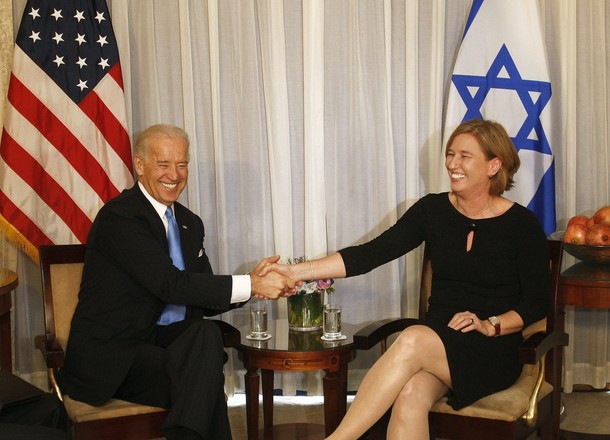
2. Israeli opposition leader Tsipi Livni and US vice president Joe Biden. As Isreallycool so astutely pointed out, these two looked like long-lost siblings on Biden's awkward trip to Israel. Or maybe there was something in the water.


3. American comedian Steve Carell and Israeli Serious Dramatic Actor Lior Ashkenazi. Seriously, these guys could play twins. My theory is that Steve Carell is secretly fed up with playing the repressed idiot all the time and moonlights in Hebrew in dramatic roles. My husband laughs at me for always calling Lior Ashkenazi "the Israeli Steve Carell"... and then for calling Steve Carell "the American version of the Israeli Steve Carell."


4. Israeli actress Maya Maron and American Comedian Sarah Silverman. Actually, considering they're both Jewish, these two actually could be cousins. From the shoulders up, this is also pretty much exactly what I looked like when I was twelve.


5. Israeli "model and actress" Orit Fox and American "model and actress" Pamela Anderson. Ok, so Orit Fox is actually a terrifying premonition of what Pamela Anderson is going to look like 20 plastic surgeries down the road, but still-- isn't the resemblance kind of striking? I love how they are both attempting to give the same sexyface in the picture above. Or maybe Orit Fox is trying to smile. It's really hard to tell.


6. Israeli "Monit HaKesef" guy Idan Rosenblum and American Australian "Was in a Chick Flick with Jennifer Lopez" guy Alex O'Loughlin. When I was flying back to Israel from the US this summer, I watched "The Back-Up Plan," a really dumb chick flick starring Jennifer Lopez. The whole time I kept staring at the male romantic lead, Alex O'Loughlin, thinking, "Wow, he looks just like the Israeli money cab guy." What? Of course that's why I was staring!


 7. The Israeli "Bachelor" and Nate Berkus, Oprah's design guy.  Among the many reasons why I couldn't take "HaRavak" seriously: Guy Gior, the bachelor himself, is probably the only person in Israel to have Nate Berkus's hair. And face. And taste in clothing. And... 

8. Israeli celebrity chef Aharoni and Mr. Miyagi. Just kidding-- Aharoni doesn't actually look like anyone. Nobody, not even Spock, can match those eyebrows.

9. My scuba instructor and Javier Bardem. Imagine Javier Bardem with George Clooney's hair and Homer Simpson's belly, plus an endless supply of Turkish coffee and cigarettes, and you'd have my Israeli scuba instructor.

Then there's the newscaster who looks exactly like Rupert Everett, and the Spanish/Israeli actress who looks exactly like Andie MacDowell, but I haven't had much luck trying to figure out their actual names in Hebrew.

Have you noticed any Israeli-American dopplegangers?
Related Posts with Thumbnails