Showing posts with label reality TV. Show all posts

19.10.10

Israeli Famous People who look like American Famous People

I bet this has something to do with the Mosad.

If you watch Israeli TV for long enough, everyone starts to look familiar. We seem to have only about 15 actors, who get cast in every series, game show, or what have you. The same politicians trade minister slots in the government... over and over and over again. However, some of these figures look familiar not because I've seen them before, but because I've seen their American doppelgangers. Take a look:

1.  Israeli news anchor Yanun Magal (pronunciation?) and American president Barack Obama.  It's in the ears, people. And the haircut. And the skin tone. I'd like to see Obama's birth certificate for proof that he doesn't put his teleprompter skills to use on Chadashot Eser.

 
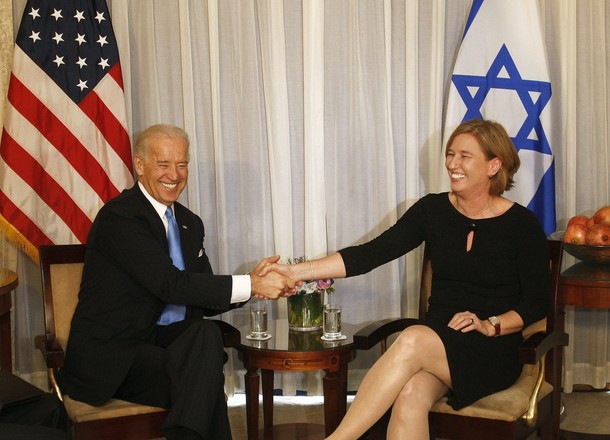
2. Israeli opposition leader Tsipi Livni and US vice president Joe Biden. As Isreallycool so astutely pointed out, these two looked like long-lost siblings on Biden's awkward trip to Israel. Or maybe there was something in the water.


3. American comedian Steve Carell and Israeli Serious Dramatic Actor Lior Ashkenazi. Seriously, these guys could play twins. My theory is that Steve Carell is secretly fed up with playing the repressed idiot all the time and moonlights in Hebrew in dramatic roles. My husband laughs at me for always calling Lior Ashkenazi "the Israeli Steve Carell"... and then for calling Steve Carell "the American version of the Israeli Steve Carell."


4. Israeli actress Maya Maron and American Comedian Sarah Silverman. Actually, considering they're both Jewish, these two actually could be cousins. From the shoulders up, this is also pretty much exactly what I looked like when I was twelve.


5. Israeli "model and actress" Orit Fox and American "model and actress" Pamela Anderson. Ok, so Orit Fox is actually a terrifying premonition of what Pamela Anderson is going to look like 20 plastic surgeries down the road, but still-- isn't the resemblance kind of striking? I love how they are both attempting to give the same sexyface in the picture above. Or maybe Orit Fox is trying to smile. It's really hard to tell.


6. Israeli "Monit HaKesef" guy Idan Rosenblum and American Australian "Was in a Chick Flick with Jennifer Lopez" guy Alex O'Loughlin. When I was flying back to Israel from the US this summer, I watched "The Back-Up Plan," a really dumb chick flick starring Jennifer Lopez. The whole time I kept staring at the male romantic lead, Alex O'Loughlin, thinking, "Wow, he looks just like the Israeli money cab guy." What? Of course that's why I was staring!


 7. The Israeli "Bachelor" and Nate Berkus, Oprah's design guy.  Among the many reasons why I couldn't take "HaRavak" seriously: Guy Gior, the bachelor himself, is probably the only person in Israel to have Nate Berkus's hair. And face. And taste in clothing. And... 

8. Israeli celebrity chef Aharoni and Mr. Miyagi. Just kidding-- Aharoni doesn't actually look like anyone. Nobody, not even Spock, can match those eyebrows.

9. My scuba instructor and Javier Bardem. Imagine Javier Bardem with George Clooney's hair and Homer Simpson's belly, plus an endless supply of Turkish coffee and cigarettes, and you'd have my Israeli scuba instructor.

Then there's the newscaster who looks exactly like Rupert Everett, and the Spanish/Israeli actress who looks exactly like Andie MacDowell, but I haven't had much luck trying to figure out their actual names in Hebrew.

Have you noticed any Israeli-American dopplegangers?

12.6.09

If an Israeli calls you "big," it's a compliment

When I traveled to Brazil in college, men would shout at women in my tour group "We love your beefy thighs," and I'm not so sure that was a compliment. But I digress.

One of my favorite Israeli idioms is "atah gadol," you're big-- conjugated appropriately, of course. (Ani gdolah!) And this doesn't have anything to do with size or weight. Rather, it means you're a "big" person-- you are bigger than your surroundings, bigger than your limitations, extraordinary. Similarly, to be big-headed ("rosh gadol") in Hebrew doesn't mean that you are full of yourself, but that you're a visionary. ("Katan alai"-- "small on me"-- is another good expression, meaning that something isn't big enough to handle you or take you down. In other words, you're "big," it's small.) I have to wonder if a lot of these expressions stem from the fact that we live in such a tiny country.

Last night, on the finale of the Israeli Amazing Race, Maya and Amichai came in a close second to Shai and Guy (real names of the winning pair). It must have been an agonizing defeat, because Maya and Amichai-- through synch, intelligence, and guts-- were ahead the entire final day, only to fall behind at the very last challenge when they had to push quarter-ton globes uphill using logs as rollers. It honestly seemed unfair. Shai and Guy are both very physically fit young guys, and either one of them probably weighed two of Maya. I really think the Amazing Race should make heavy challenges proportional to participant weight.

As Maya and Amichai reached the finish line, all the other contenstants chanted, "Hem gdolim, hem gdolim," a soccer cheer-- and I couldn't have agreed more. The greatest thing about the Israeli Amazing Race was that some of the physically smallest contestants (the blondiniot, Maya) were the "biggest" in the Israeli sense. Or, as they would put it, they are "fighteriots." Maya and Amichai were disappointed, but not disappointing.

Anyway, a few days ago I said that Maya was awesome because of her name (which is doubly awesome because she spells "Maya" mem-yud-hey, like I do, prompting total strangers to explain to me that my name is spelled wrong. It's not). However, that isn't the only reason Maya (ok, and Amichai... we liked him too) are still #1 in my book, and probably for most people who watched. A few other reasons:

-They played an incredibly fair game, never screwing over any other contestants
-Like any couple, they fought a good deal along the way, but they always made up and seemed to really care about one another. They bickered about each other's actions, but they never attacked each other's selves, if that makes sense, and they supported each other when it counted. (Personally, I could never have been as nice if I were in Maya's position during that final swing challenge!)
-I really admire Maya's physical toughness. She's got to be some kind of athlete, and as a past marathoner, I admire Israeli women who compete. (Israeli races are mostly men.) I think she's a runner too! See her blog.
-Maya made aliyah after spending almost her entire childhood in the US (with at least one Israeli parent). In some ways, I think this is harder, because you come to Israel sounding like a native Israeli, yet missing so many cultural references, Israeli life skills, and vocabulary words. I get away with a lot because I sound like a clueless olah.
-They gave EVERYTHING they had to try to win the race... and by "they," I probably mean "Maya." :)

And, of course, the biggest reason why I now think Maya is amazing...

-She commented on this blog!! Seriously! Read it here! (This really is a small country. I saw another team from the Merutz leMillion through the window of a bus in Tel Aviv a few weeks ago, and I'm pretty sure I saw a girl from "Mifratz haAhava" at a pizza shop around the corner-- although I'm glad to say I didn't watch enough "Love Bay" to be sure.)

So Maya and Amichai, you're "gdolim." Mazel tov on making olim proud, and good luck in all you do in the future!

Ok, I promise that my Israeli Amazing Race obsession will release its grip on this blog now... at least until next season. :)

6.5.09

You are never too old to wear Spandex

I'm a junkie for wardrobe-improvement shows like What Not To Wear, in which fashionably superior women or gay men take people with poor fashion sense and teach them how to dress with class and age-appropriateness. Yet I have come to understand that Trinny and Susana's fashion choices simply don't apply in Israel.

For one thing, "age-appropriate" here seems to be defined like this: the older you are, the harder you have to work to flaunt your sex appeal. Otherwise how will anyone notice you?

The picture on the left is of Tsipi Shavit, a beloved Israeli performer for whom I have huge respect. I saw her as part of a three-woman show in Kiryat Chaim recently, and at 62 years old she sparked with energy-- doing high kicks, singing show tunes, running around the stage, cracking jokes about her sex life. My husband remembers Tsipi from his childhood when she became famous for her kids shows (and Hebrew translations of songs like "Somewhere Over the Rainbow). From an American perspective, this picture would land her on a worst-dressed list. In Israel, this would be appropriate wedding attire (and reminds me of what some Israelis wore to my wedding).

Israel is a country of schizophrenic dichotomies. In certain neighborhoods of Jerusalem and Bet Shemesh, a woman can get beaten for wearing pants or (gasp!) jogging in the wrong neighborhood. After all, nothing is more provocative than a smelly, sweaty woman in a sports bra and a baggy t-shirt. In secular areas, on the other hand, it seems like the more (spotty, sun-damaged) skin you show, the better. "Proper work attire" might involve skin-tight, cleavage-bearing purple spandex. I'm only slightly exaggerating when I say that what slutty college girls wear to frat parties in the US is average attire for 50-year-old bank tellers here.

And the thing is that it's all about context-- while you might look sad and desperate in America wearing the same clothing, you'll look snazzy to your friends in Israel. If a middle-aged woman wears silver mesh over a black bra, tight embroidered jeans, and silver platform shoes in the US, she'll look like an aging hooker-- in Israel, she'll look like she really keeps herself up. If she, on the other hand, wears loose-fitting button-down shirts with a cardigan and straight-legged linen pants, she will probably look boring to her Israeli friends. (She's really let herself go.) Also, Israelis don't let a few fat folds keep them from wearing a bikini or spandex top-- and if you're male, certainly don't stop wearing your Speedo just because you can't see your toes.

I'm curious about what "What Not to Wear" would look like if it came to Israel. It would either involve a total reformation of Israeli fashion sense (Israelis love to critique each other and believe most things are done better outside Israel) or it would embrace Israeli sensibilities. I can see "Trinny and Shoshana" now: "No, no, you must wear POLYESTER to bring out your eyes!"

25.3.09

Get Excited about Eurovision!

For uninitiated Americans, Eurovision is a fabulous competition involving European nations and a few nations that think they're European, such as Israel. Every country sends singers and elaborate dance routines to the competition, and then people in every country call in to vote for their favorites-- then each country awards points to the most popular acts proportionally.

Countries can't vote for themselves, which means people tend to vote for countries similar to their own... the breakup of the Soviet Union was the best thing that could possibly happen for Russia's Eurovision chances, and sure enough, Russia won last year with the combination of a sappy pop song, a violinist, and an Olympic figure skater pirhouetting around the musicians on a miniature ice rink. Other countries seem to figure that they have no chance of winning anyway, so they go bizarre instead-- I seem to remember seeing dancing parsnips in one Eastern European entry.

Because this is really an international popularity contest, Israel generally doesn't do that well, despite having had last year (in my humble opinion) the best entry: our cochav nolad (think "American Idol") winner, Boaz Mauda. Here was his performance last year. Bear in mind that Israel's most famous transvestite and former Eurovision winner, Dana International, not only wrote this beautiful song but also (I'm guessing) designed his costume and choreography. Despite this, it's an absolutely beautiful song:


Boaz Mauda finished in ninth place, which isn't bad.

At any rate, this year Israel seems to be trying to overcome the knee-jerk we-hate-Israel reaction by submitting a duet between a Palestinian and an Israeli singer. The one who looks like an Arab is the Israeli, Noa, while the one who looks Ashkenazi is Mira Awad, a Palestinian Christian. I think it's a pretty song, and its message is uplifting (and unspecific) enough to appeal to almost anyone. What do you think? Too politically correct, or inspiring?

The actual competition will air mid-May. Get ready!

Related Posts with Thumbnails